Demand Response
Since 1987, Taipower has offered demand response measures, using bill discounts to incentivize peak-shaving and load-shifting. Standard options include planned reductions, real-time emergency cuts, and demand bidding.
In 2024, Taipower piloted automated demand response for small business and residential sectors, with plans for a smart energy-saving program in 2026 that leverages smart meters and appliances for remote load control. By 2025, DR participation reached 2.99 GW, peaking at 3.66 GW when factoring in ancillary services.
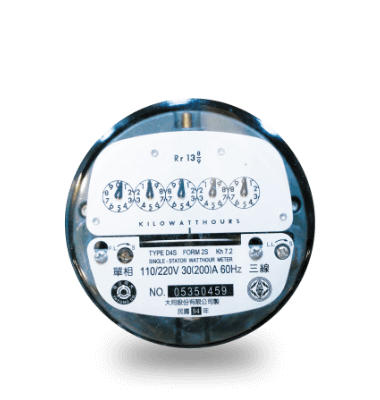
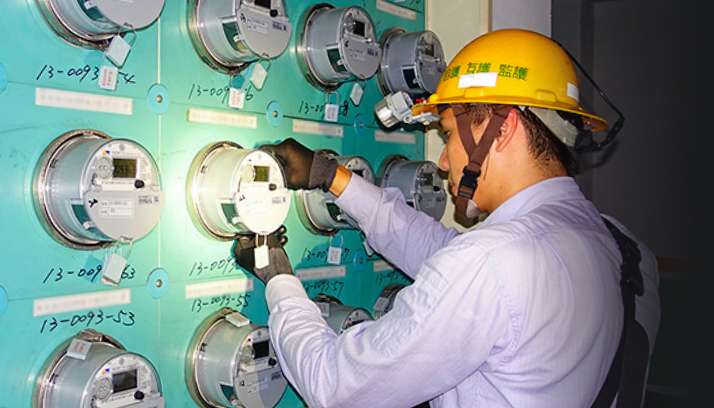
Electro-mechanical meter
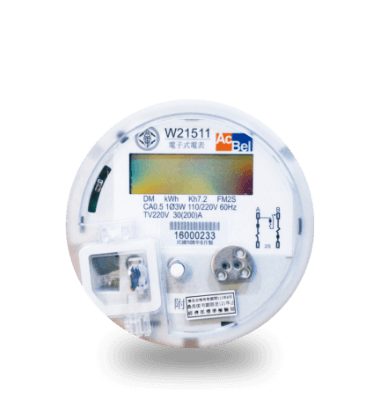
Electricity meter
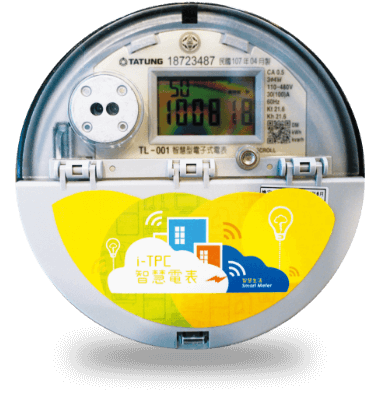
Automated Metering Infrastructure (AMI)
Time-of-Use Rates
Time-of-Use Rates Time-of-Use (TOU) rates apply different tariffs for different time periods to reflect variations in power supply costs and guide users to shift or reduce peak electricity consumption to off-peak hours. Taipower has implemented TOU rates since 1979, and currently, there are 16 TOU rate schemes available for different types of users. TOU rates have been mandatory for high-voltage users since 1989, while low-voltage users may opt in voluntarily. To meet system requirements and offer users more flexible options, Taipower continues to refine and promote TOU rate schemes.

Energy Conservation Diagnostics and ESCO Promotion
To boost energy efficiency, Taipower offers energy diagnostics and consultations. Its experts inspect facilities, identify savings potential, recommend upgrades, and project cost benefits to guide users in evaluating ESCO solutions. Implementation remains optional based on each user's budget, operational needs, and ROI. Taipower continuously promotes voluntary upgrades by highlighting clear financial payback.
Innovative Services via the Taipower Mobile App
Taipower continues to expand payment options and push notification features. For low-voltage AMI users, the app now offers visualized consumption charts, unbilled electricity data, tariff simulation, usage alerts, and residential electricity analysis to meet user needs and enhance service quality.

Information and Communication Security Risk Management Framework
Taipower has established an information and communication security risk management framework that covers both company-level and department-level risk management. In line with the Company's risk management policy, the framework includes risk identification, assessment, control, and monitoring to mitigate the impact of information security risks on operations and to support sustainable development. Taipower's information security policy is based on the ISO/ IEC 27001 international standard and covers areas such as system inventory, risk assessment, vendor management, and incident reporting.
In accordance with internal policies, Taipower implements the following information security management measures:
- Personnel security management and training
- Vendor relationship security management
- Information security incident management
- Information asset security management
- Network security management
- System access control
- Business continuity planning
Information Security Governance and Risk Management
Taipower enforces an enterprise-wide cybersecurity risk management framework aligned with ISO/IEC 27001. The framework prioritizes continuous asset inventories, risk assessments, supply chain security, access control, and incident reporting to safeguard grid stability and operational continuity.
In 2025, Taipower executed security policy training, asset classification, routine vulnerability scanning and patching, business continuity drills, social engineering tests, and penetration testing. Consequently, no major cyber or security regulation violations occurred across its smart grid or power equipment.
External Cybersecurity Threat Protection and Response Results